



Table of Contents
Cerdia Cellulose Acetate Tow Material for Cigarette Filter:
This article explains the difference between EU-grade virgin Cerdia cellulose acetate tow and recycled/reprocessed tow used in cigarette filter rod manufacturing, and why the choice of raw material directly impacts filtration performance, product consistency, and brand quality. It also positions Truewell Filter’s sourcing practice, using only European-origin Cerdia tow, as a key differentiator for cigarette manufacturers evaluating filter rod suppliers.
Why Raw Material Sourcing Matters in Cigarette Filter Manufacturing?
Every cigarette filter rod whether it’s a mono acetate filter, dual filter, recessed filter, capsule (click) filter, or specially shaped rod starts with one foundational raw material: cellulose acetate tow. This fibrous material, also known as acetate tow, filter tow, or CA tow, is what gives a filter rod its density, firmness, filtration efficiency, and consistency from batch to batch. No matter how advanced a manufacturer’s shaping, capsule-insertion, or flavor-infusion machinery is, the final product can only be as good as the tow that goes into it.
This is why sourcing decisions around cellulose acetate tow suppliers matter far more than most buyers realize. Two filter rods can look nearly identical on the outside while performing very differently once lit and the difference almost always traces back to the grade and origin of the tow.
 Call Now!
What Is Cerdia Tow?
Cerdia is one of the world’s leading manufacturers of cellulose acetate tow for cigarette filters, with roots in acetate fiber production dating back to 1912. Headquartered in Basel, Switzerland, with major production facilities in Freiburg, Germany, Cerdia is widely regarded across the tobacco industry as a premium filter tow producer, supplying filter rod manufacturers globally with what is commonly referred to as European-grade acetate tow.
Virgin Cerdia tow is manufactured directly from high-purity wood pulp under tightly controlled production conditions, ensuring uniform fiber denier, consistent crimp structure, and stable plasticizer retention. These are not minor technical details, they are the exact properties that determine a filter rod’s pressure drop, filtration efficiency, and firmness, which in turn shape the smoker’s experience and the manufacturer’s regulatory compliance.
EU Virgin Tow vs. Recycled Tow: What's the Real Difference?
In the global filter rod supply chain, manufacturers generally source acetate tow from one of two categories:
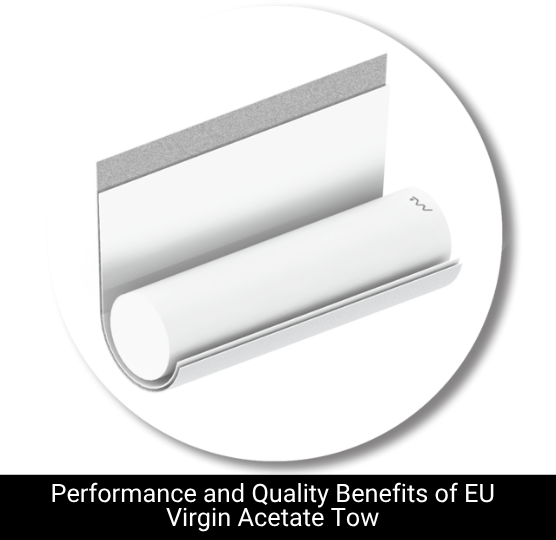
EU / Virgin Cellulose Acetate Tow (e.g., Cerdia)
- Produced from fresh, high-purity wood pulp under strict European manufacturing and quality standards
- Consistent fiber denier and crimp count across every production batch
- Stable plasticizer absorption, resulting in predictable firmness and pressure drop
- Minimal impurities, ensuring cleaner smoke delivery and taste
- Full traceability from raw material to finished tow, supporting compliance and quality documentation
- Higher production cost, reflected in a premium but consistent filter rod
Recycled / Reprocessed Tow
- Derived from reclaimed, reprocessed, or blended acetate fiber sources, or in some cases polypropylene-based tow used as a lower-cost substitute, rather than fresh virgin pulp
- Greater batch-to-batch variability in fiber quality, density, and crimp structure
- Less predictable plasticizer uptake, which can cause inconsistent rod firmness and pressure drop
- Higher risk of impurities or contamination affecting taste, aroma, and smoke purity
- Lower raw material cost, making it attractive to manufacturers competing purely on price
- Reduced traceability, which can complicate quality assurance for brands with strict compliance requirements
While recycled or lower-grade tow may reduce upfront material costs, the trade-off often shows up downstream, in inconsistent filtration performance, uneven firmness across production runs, and a smoking experience that can vary noticeably from batch to batch. For cigarette brands built on consistency and taste reputation, this variability is a real commercial risk, not just a technical footnote.
Why Some Filter Rod Manufacturers Choose Cheaper Tow
Across the global cigarette filter rod supply chain, cost pressure is constant. Because raw material not machinery or labor typically represents the largest share of a filter rod’s production cost, some manufacturers turn to cheaper, recycled, or blended acetate tow sources to offer lower prices to cigarette brands. In a competitive export market, this can look attractive on a price quotation.
However, filter rod buyers evaluating suppliers should look beyond the initial quote and ask a simple question: what tow is actually inside this rod? A filter rod manufacturer that won’t specify its tow source or that frequently changes suppliers based on the cheapest available lot is far more likely to be working with inconsistent or recycled-grade material, even if that isn’t stated openly.
Truewell Filter's Commitment: EU Cerdia Tow Only
Truewell Filter has made a deliberate sourcing decision that sets it apart from many competing cigarette filter rod exporters: every filter rod Truewell produces is made exclusively with European-origin Cerdia cellulose acetate tow which is never recycled tow, polypropylene-based tow, or any other blended-source tow.
This commitment reflects Truewell’s founding principles of True Technology, True Quality, and True Service, and it directly benefits every product in Truewell’s portfolio:
- Mono Acetate Filter Rods: built on EU virgin tow for consistent airflow and balanced taste in mainstream cigarette production
- Dual Filter Rods: combining acetate segments (with or without charcoal) where tow consistency is critical to achieving a predictable dual-segment performance
- Recessed Filter Rods: where uniform tow density is essential to maintaining a controlled hollow recess without structural weakness
- Capsule Filter Rods (Click Filter Rods): where stable tow firmness ensures the capsule sits securely and activates cleanly on click
- Flavored Filter Rods: where clean, high-purity tow prevents unwanted interference with infused aroma compounds
- Inner Shaped (Tube) Filter Rods: where precise fiber structure supports consistent hollow-core ventilation
- Outer Shaped Filter Rods: where firm, uniform tow holds embossed or sculpted exteriors without deformation during production
By standardizing on EU-grade Cerdia filter tow across its entire product range, Truewell ensures that every rod regardless of type or customization delivers the same stable pressure drop, firmness, and filtration quality that global cigarette brands depend on for repeat orders and long-term partnerships.
 Email Us Now!
What This Means for Cigarette Brands and Manufacturers
For procurement teams evaluating filter rod suppliers, the tow source should be one of the first questions asked not an afterthought. The right raw material choice affects:
- Consistency across production runs: critical for maintaining brand reputation batch after batch
- Regulatory compliance: traceable, high-purity tow simplifies documentation for tar, nicotine, and material safety requirements
- Smoking experience: smoother draw, cleaner taste, and predictable filtration directly influence consumer satisfaction and repeat purchase
- Long-term cost efficiency: while virgin EU tow carries a higher upfront cost, it reduces the risk of rejected batches, inconsistent product complaints, and reputational damage tied to quality issues
Cigarette manufacturers sourcing from suppliers using unspecified or recycled tow may save on the initial quote, but often absorb hidden costs in the form of inconsistent quality, customer complaints, or compliance headaches later in the supply chain.
EU Virgin Cellulose Acetate Tow Filter Rod Manufacturer
The difference between EU virgin Cerdia tow and recycled acetate tow isn’t a minor specification, it’s a defining factor in the quality, consistency, and reliability of every cigarette filter rod produced. As global demand grows for dependable, high-performance filter rods including mono acetate, dual, recessed, capsule/click, flavored, tube, and outer-shaped filter rods. Cigarette brands are increasingly prioritizing suppliers who are transparent about their raw material sourcing.
Truewell Filter’s exclusive use of European Cerdia cellulose acetate tow across its full product range reflects a commitment to consistent quality that many lower-cost competitors relying on recycled tow cannot match.
Contact Truewell Filter today to learn more about our EU-tow-based filter rod range, request samples, or discuss long-term supply partnerships built on genuine material quality.