



Table of Contents
Capsule Cigarette Filters: Function of Capsule-Balls & Segments
The capsule cigarette filter has become one of the most recognisable innovations in tobacco product engineering. Unlike conventional cellulose acetate filters, the capsule filter integrates a discrete, flavour-filled ball within the filter structure itself – enabling the smoker to modify the character of their smoke on demand. Understanding how this system works mechanically, from the composition of the capsule shell to the segmentation of the filter rod, reveals a sophisticated interplay of materials science, fluid dynamics and precision manufacturing.
 Call Us Now!
Capsule Filter Design: The Anatomy of the Ball-in-Rod System
At the core of every capsule filter rod lies a single engineering decision: where to place the capsule, how large to make it and how to ensure it stays intact until the moment of activation. The capsule itself is typically a spherical gelatine shell filled with a flavoured liquid – most commonly menthol or fruit-based aromatic compounds. This shell sits embedded within the cellulose acetate tow of the filter segment, held in place by the density of the surrounding fibres.
The placement of the capsule within the capsule filter rod is not arbitrary. In most configurations, the ball is positioned closer to the tobacco end of the filter, allowing the released flavour to travel through the maximum length of tow before reaching the smoker. This deliberate positioning ensures the flavour disperses evenly rather than arriving as a concentrated burst. Capsule placement depth is one of the key specifications communicated between a capsule filter rod supplier and the tobacco manufacturer, as even minor deviations can alter the sensory outcome significantly.
The diameter of the capsule is calibrated to match the inner circumference of the filter rod precisely. A capsule that is too small will shift during production or transport, creating inconsistent activation. One that is too large risks deforming the surrounding tow, which can affect draw resistance and overall filter integrity. These tolerances are governed at the manufacturing level, making the choice of a reliable capsule filter rod manufacturer a critical decision in product development.
Read Our Article
Charcoal vs Capsule Filter Rod - Market PreferenceCapsule Filter Rods and Shell Mechanics: How the Break Works
The rupture of the capsule is the defining mechanical event in a capsule cigarette filter’s function. This moment – triggered by the smoker pressing their finger against the filter – must be reliable, immediate and complete. Incomplete rupture leaves residual liquid inside the shell, reducing flavour delivery. Premature rupture during handling or packaging contaminates the filter before use.
The shell of a standard capsule is composed of gelatine or a carrageenan-based compound, chosen for its combination of flexibility and brittleness under point-load pressure. At rest, the shell maintains structural integrity under the compression of the surrounding tow. When localised pressure is applied externally through the cigarette paper and tow, the shell wall reaches its fracture threshold and collapses cleanly, releasing its contents into the adjacent filter fibres.
Shell wall thickness is one of the most closely managed variables in capsule filter rod production. A thicker shell requires more force to break, which may frustrate some users or result in incomplete activation. A thinner shell is easier to rupture but may be susceptible to accidental crushing during packaging or retail handling. The optimal wall thickness is determined through systematic pressure testing and this specification forms part of the technical brief shared between the capsule filter rod supplier and the end-client.
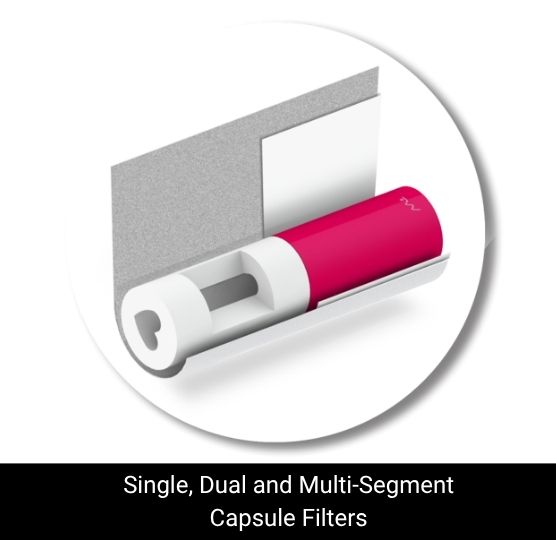
Capsule Cigarette Filter Rod Segment Architecture: Single vs. Dual vs. Multi-Segment
Modern capsule filter rods are not monolithic structures. They are assembled from distinct segments, each performing a specific mechanical or sensory function. Understanding this segmented architecture is essential to grasping how capsule filter cigarettes deliver such varied and controllable experiences.
Single-Segment Capsule Filters
In the simplest format, a capsule filter rods configuration consists of a single cellulose acetate segment containing one embedded capsule. The entire length of the tow is uniform in density and the capsule is typically positioned at the midpoint or toward the tobacco-facing end. This configuration is the most widely used across mainstream capsule filter cigarettes, largely because it keeps manufacturing complexity manageable while still delivering the on-demand flavour that defines the category.
Dual Capsule Filter Rods
Dual capsule filter rods represent a more complex engineering achievement. In this configuration, two separate capsules – often containing different flavour compounds – are embedded within the same filter rod at specified intervals. This allows the smoker to activate one capsule, the other or both in sequence, creating multiple flavour states from a single cigarette. The placement of each capsule must ensure that activating one does not inadvertently rupture the other, which requires precise inter-capsule spacing calibrated during the production process.
Dual capsule filter rods are more demanding to produce consistently and their quality depends heavily on the capabilities of the capsule filter rod manufacturer. The technical challenge lies not only in placing two capsules accurately but also in ensuring that the surrounding tow density is uniform throughout – any localised compression can create preferential airflow channels that distort flavour delivery.
Our Other Filters
Dual Cigarette Filter RodMulti-Segment and Charcoal-Integrated Configurations
Some premium capsule filter rods for tobacco products incorporate additional segments – such as a recessed paper or hollow acetate section – between the capsule-containing tow and the cigarette paper tube. These additional segments serve as mixing chambers, allowing the flavour released from the capsule to distribute more uniformly before reaching the smoker. In certain configurations, a thin layer of activated charcoal is incorporated into a secondary segment to interact with specific gas-phase constituents, though this does not alter the fundamental capsule-activation mechanics.
Menthol Capsule Filter Rods: Specific Mechanics of Cooling Delivery
Menthol capsule filter rods are the most commercially prevalent variant and also the most technically studied. Menthol – a cyclic terpene alcohol – has a low boiling point and high vapour pressure, meaning it volatilises readily once the capsule is ruptured. The moment the shell breaks, menthol vapour begins to permeate the surrounding tow fibres and subsequently the gas-phase smoke passing through the filter.
The physical sensation associated with menthol capsule filter cigarettes – the characteristic cooling and mild anaesthetic effect on the throat – arises from menthol’s interaction with cold-receptor channels in the oral and respiratory mucosa. This is a physiological response to the compound itself, not to any actual reduction in temperature. The mechanics of the capsule filter, therefore, are directly tied to a measurable receptor-level interaction, making the engineering of reliable capsule rupture a matter of sensory pharmacology as much as product design.
Because menthol is volatile, capsule integrity during storage becomes particularly important for menthol capsule filter rods. Any microscopic breach in the shell – caused by transport vibration, temperature cycling or mechanical stress – can result in gradual menthol loss, diminishing the flavour impact when the capsule is eventually activated. This has driven the development of thicker, more resilient gelatine formulations specifically for menthol-fill applications.
Flavored Capsule Filter Rods: Expanding Beyond Menthol
While menthol dominates the capsule segment, flavored capsule filter rods encompass a much broader chemical landscape. Fruit-derived esters, botanical extracts, herbal compounds and synthetic aroma chemicals are all used as capsule fill materials. Each flavour type presents distinct challenges related to viscosity, vapour pressure, chemical stability and interaction with cellulose acetate fibres.
High-viscosity fills – such as some berry or citrus compounds – require the capsule shell to rupture fully and cleanly, as incomplete rupture may leave a significant volume of fill unexpelled. Low-viscosity fills, by contrast, spread through the tow more readily but may also migrate along the filter length before activation, creating flavour inconsistency. A knowledgeable capsule filter rod supplier will work with the fill chemistry to match shell properties and tow density to the specific flavour being used.
The interaction between the flavour compound and cellulose acetate is also of mechanical relevance. Certain aromatic compounds can plasticise or swell acetate fibres over time, changing the draw resistance of the filter. This effect must be accounted for during product development, typically by selecting fill concentrations that remain below the threshold at which fibre interaction becomes detectable by the consumer.
Capsule Filter Rods for Tobacco: Airflow, Draw Resistance and Segment Density
For any capsule filter rods for tobacco application, the relationship between segment density and draw resistance is fundamental. The cellulose acetate tow that surrounds the capsule must be packed to a density that achieves the target pressure drop across the filter. Too loose and the filter provides insufficient resistance, making the cigarette feel hollow. Too dense and the draw becomes laboured, reducing consumer acceptance.
The presence of the capsule itself introduces a localised disruption in tow density. The volume occupied by the ball – typically 2–4 mm in diameter – displaces tow material, creating a zone of lower fibre density around it. This local variation in density can produce a detectable change in draw resistance at the moment of activation, which some manufacturers intentionally exploit as a tactile cue to the smoker that the capsule has ruptured correctly.
Post-rupture airflow dynamics also shift. Once the fill liquid is released and absorbed into the tow, the former void space around the now-collapsed shell can alter the local airflow path. In well-designed capsule filter rods for tobacco products, this effect is negligible by the time the smoker takes their first puff after activation. In poorly designed configurations, it can produce a transient increase in airflow – often described by consumers as the filter feeling temporarily open – before the saturated tow creates additional resistance.
 Email Us Now!
Capsule Filter Rod Supplier Considerations: Precision in Commercial Production
Producing capsule filter rods at commercial volumes requires engineering rigour across every stage of the process – capsule fabrication, fill loading, shell sealing, tow preparation and rod assembly. Each step has its own tolerance window and deviations in any one step can cascade into quality issues downstream.
A capable capsule filter rod supplier brings expertise in capsule-to-tow matching, which involves selecting tow grades – defined by denier per filament and total denier – that will cradle the capsule without excessive compression or looseness. The supplier also manages the rod-forming process, where the tow is gathered around the capsule and wrapped in filter paper with consistent tension. Any variation in tension affects both the final rod circumference and the degree to which the capsule is held under pre-load pressure.
Quality control in capsule filter rod manufacturer involves both destructive testing – manually activating samples to verify complete rupture and measure fill release – and non-destructive methods such as X-ray imaging to confirm capsule position within the rod. A reputable capsule filter rod manufacturer will operate statistical process control protocols to detect and correct drift before it results in out-of-specification product reaching the tobacco manufacturer.
Our Other Filters
Mono Cellulose Acetate Cigarette Filter RodFrequently Asked Questions on Capsule Cigarette Filters
What exactly is inside the ball in a capsule cigarette filter?
The ball in a capsule filter is a gelatine or carrageenan shell filled with a flavour compound in liquid form. For menthol capsule filter rods, this fill is predominantly liquid menthol or a menthol-in-carrier solution. For flavored capsule filter rods, the fill may be a fruit ester blend, a botanical extract or a synthetic aroma compound. The shell is designed to hold the fill securely under normal handling conditions but rupture fully when pressed.
How is the capsule positioned correctly within the filter rod during manufacturing?
Capsule placement is controlled by the rod-forming machinery, which uses mechanical guides and sensors to insert the capsule at a programmed depth within the tow stream before the rod is wrapped. High-speed production lines typically verify capsule presence using optical or X-ray detection immediately after insertion, rejecting rods where the capsule is absent or mispositioned. This is one of the core engineering challenges for any capsule filter rod manufacturer operating at scale.
What distinguishes dual capsule filter rods from standard single-capsule versions?
Dual capsule filter rods contain two discrete capsule balls within the same filter rod, typically filled with different flavour compounds. The smoker can activate either or both, creating up to three flavour states from one cigarette. The engineering challenge is ensuring that the two capsules are spaced far enough apart that pressing one does not inadvertently rupture the other, while still fitting within the standard filter rod length.
Does the capsule filter rod change how smoke passes through the filter?
Yes, to a measurable but usually minor degree. Before activation, the capsule displaces tow material, creating a slightly lower-density zone at its location. After activation, the released fill saturates the surrounding fibres, which can temporarily alter draw resistance. Well-engineered capsule filter rods for tobacco products are designed so that these effects fall within acceptable sensory thresholds.
How do manufacturers ensure capsules do not rupture prematurely during storage?
Shell wall thickness, fill volume and tow compression are all calibrated to ensure that the capsule withstands the mechanical stresses of cigarette production, packaging, transport and retail handling without activating. This typically involves setting the rupture threshold well above the forces experienced during normal handling while still remaining easily achievable by a consumer's finger. Accelerated ageing tests and drop-and-vibration protocols are standard quality assurance procedures used by reputable capsule filter rod suppliers to validate these parameters.
Conclusion
The capsule cigarette filter is far more than a novelty delivery mechanism – it is a precisely engineered system in which shell chemistry, tow mechanics, segment architecture and fill physics must all work in concert to produce a reliable and repeatable consumer experience. Whether the application calls for menthol capsule filter rods, flavored capsule filter rods or the more complex dual capsule filter rods, the underlying principles of capsule placement, rupture mechanics and flavour distribution remain consistent. What changes is the specificity of the engineering required to meet each flavour and format’s unique demands. For tobacco manufacturers seeking to work with this technology, understanding these mechanical fundamentals is not a peripheral consideration – it is central to product specification, quality assurance and the selection of a capable capsule filter rod supplier or capsule filter rod manufacturer who can deliver consistency at commercial scale.