



Table of Contents
Comparing Interactive and Continuous Flavor Technologies in Modern Cigarette Filters
Flavor delivery has become one of the most decisive elements in modern cigarette product development. As consumer expectations evolve and competition intensifies, cigarette manufacturers are increasingly evaluating how filter technology can influence smoking experience, brand positioning, and long-term market relevance. Among the most widely adopted flavor-related solutions, capsule filter rods and flavored filter rods stand out as two distinct approaches—each offering unique advantages and strategic implications.
Rather than a simple technical choice, selecting between capsule filter rods and flavored filter rods is a brand-level decision that affects consumer perception, production planning, regulatory exposure, and portfolio scalability. Understanding how these two technologies differ in practice helps manufacturers align filter selection with market goals and operational realities.
Two Flavor Technologies Serving Different Brand Strategies
Capsule filter rods and flavored filter rods both aim to enhance smoke aroma and taste, but they achieve this through fundamentally different mechanisms. Capsule filters rely on an interactive element, allowing smokers to activate flavor on demand by crushing a capsule embedded within the filter. Flavored filter rods, by contrast, integrate aroma directly into the filter material, delivering a continuous and consistent flavor throughout the smoking experience.
This distinction shapes how consumers interact with the product. Capsule filters emphasize choice and engagement, while flavored filters emphasize consistency and smoothness. For manufacturers, the decision often depends on how much control they want to hand over to the smoker versus how much they want to define the experience themselves.
 Click Here!
Consumer Experience: Control Versus Consistency
From a smoker’s perspective, capsule filter rods offer flexibility. The ability to switch from a non-flavored to a flavored experience mid-smoke has strong appeal in markets that favor novelty, experimentation, and personalization. This interactive element often enhances perceived value, especially in younger adult and premium-focused segments.
Flavored filter rods, however, appeal to consumers who prioritize familiarity and balance. Because flavor is delivered continuously, the smoking experience feels more predictable and refined. There is no learning curve or decision point during smoking, which can be particularly attractive in markets where simplicity and smoothness are valued.
For cigarette brands, this difference influences how products are positioned—whether as dynamic and interactive, or as refined and consistent.
Our Other Product
Dual Cigarette Filter RodCustomization Scope and Brand Differentiation
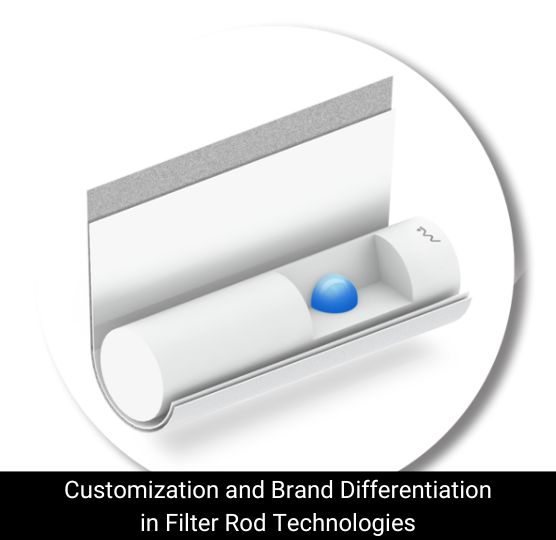
Both filter technologies offer customization, but in different ways. Capsule filter rods allow brands to experiment with capsule placement, number of capsules, and flavor burst intensity. Some manufacturers use this flexibility to create multi-variant product lines that share a core tobacco blend but differ in flavor interaction.
Flavored filter rods provide customization through aroma profiles, intensity levels, and flavor longevity. Instead of focusing on activation, brands focus on subtle differentiation—creating signature aromas that align closely with tobacco blends and brand identity.
Strategically, capsule filters tend to support bold differentiation within a portfolio, while flavored filters support brand consistency across regions and SKUs.
Manufacturing Compatibility and Production Stability
From a production standpoint, flavored filter rods are generally simpler to integrate into existing cigarette manufacturing lines. Their structure is closer to standard filter rods, with flavor applied through controlled processes that do not significantly alter rod geometry or machine handling behavior.
Capsule filter rods, while well-established, introduce additional variables such as capsule insertion accuracy and structural integrity during high-speed production. This requires tighter process control and more coordination between filter production and cigarette assembly.
For manufacturers operating multiple production lines or targeting very high volumes, production stability and efficiency often weigh heavily in the decision-making process.
Cost Structure and Portfolio Scalability
Cost considerations also differ between the two filter types. Capsule filter rods typically involve higher unit costs due to capsule materials and insertion processes. As a result, they are often positioned in mid-range to premium segments, where higher perceived value can justify added cost.
Flavored filter rods tend to offer more predictable cost structures and are easier to scale across large product portfolios. This makes them particularly suitable for brands that operate across multiple price tiers or supply large export volumes.
Some manufacturers strategically use both—capsule filters for flagship or innovation-driven products, and flavored filters for stable, high-volume lines.
Regional Preferences and Market Dynamics
Global cigarette markets show clear variation in how these filter technologies are received. Capsule filter rods have gained strong traction in regions where consumers value choice, novelty, and flavor switching. In contrast, flavored filter rods perform well in markets that favor smoothness, balance, and understated aroma enhancement.
Regulatory sensitivity also plays a role. In some regions, embedded flavor delivery is viewed differently from interactive flavor activation, influencing how brands structure their product offerings across borders.
Understanding these regional dynamics allows manufacturers to deploy the right filter strategy without overhauling core production systems.
Regulatory and Compliance Considerations
While both technologies must comply with local regulations, their visibility differs. Capsule filters are highly noticeable due to their interactive nature, which may attract closer regulatory scrutiny in certain markets. Flavored filter rods, being less visually distinctive, can sometimes offer a more discreet approach to aroma enhancement.
For global manufacturers, this has led to diversified filter strategies—using different flavor technologies across regions while maintaining a unified brand identity.
Our Other Product
Recessed Filter RodsStrategic Use Cases: Choosing the Right Fit
Capsule filter rods are often the better choice when brands want to emphasize interaction, innovation, and consumer control. They work well for limited editions, premium lines, and markets where flavor switching is a key selling point.
Flavored filter rods are more suitable when consistency, scalability, and smooth delivery are priorities. They align well with long-term brand building, export-focused production, and markets that value subtle sensory enhancement over interaction.
In many cases, the most effective strategy is not choosing one over the other, but understanding how each fits into a broader portfolio.
 Email Us Now!
Supporting Informed Decisions with the Right Manufacturing Partner
Selecting between capsule and flavored filter rods is not only a marketing decision—it is also a technical and operational one. Manufacturers benefit from working with partners who understand both technologies and can provide guidance based on production realities, market goals, and regulatory environments.
Truewell supports global cigarette manufacturers with both capsule filter rods and flavored filter rods, offering engineering-driven solutions, customization support, and scalable production. By aligning filter technology with brand strategy, manufacturers can introduce flavor innovation without compromising consistency or efficiency.
Final Perspective: Strategy Before Technology
There is no universal answer to whether capsule filter rods or flavored filter rods are “better.” The right choice depends on how a cigarette brand defines value for its consumers, manages production complexity, and positions itself across global markets.
Brands that evaluate flavor technology through a strategic lens—rather than a purely technical one—are better equipped to build resilient, adaptable product portfolios that perform consistently in a changing industry.
FAQs on Capsule Filter Rods & Flavoured Filter Rods
What is the main difference between capsule filter rods and flavored filter rods?
The key difference lies in flavor delivery. Capsule filter rods allow smokers to activate flavor on demand, while flavored filter rods deliver aroma continuously throughout the smoking experience without interaction.
Which filter type offers better scalability for global cigarette production?
Flavored filter rods generally offer easier scalability due to simpler production integration and more predictable cost structures, making them suitable for high-volume and export-oriented manufacturing.
Are capsule filter rods only suitable for premium cigarettes?
While commonly used in premium and mid-range products, capsule filter rods can be adapted for different segments depending on brand positioning, target market, and cost strategy.
How do regional preferences affect the choice between capsule and flavored filters?
Some regions favor interactive, choice-driven products like capsule filters, while others prefer consistent, smooth flavor delivery offered by flavored filter rods. Regulatory frameworks also influence regional adoption.
Can cigarette brands use both capsule and flavored filter rods in the same portfolio?
Yes. Many global brands use capsule filter rods for innovation-led products and flavored filter rods for stable, high-volume lines, allowing them to address diverse consumer preferences efficiently.