



The global tobacco industry is undergoing a notable structural shift in 2026, particularly in how cigarette manufacturers source, specify and scale their filter rod supply chains. Among all filter types, mono acetate filter rods continue to hold the most dominant position in global cigarette production volumes. The demand dynamics shaping this segment in 2026 are driven by evolving regional consumption patterns, regulatory pressures, supply chain realignments and manufacturer preferences for consistency and cost efficiency.
Table of Contents
Mono Acetate Filter Rods: Market Position in the Global Tobacco Supply Chain
Mono acetate filter rods remain the most widely used filter type in cigarette manufacturing globally. Their dominance stems from a combination of production reliability, raw material availability and compatibility with high-speed cigarette-making equipment. In 2026, manufacturers across Southeast Asia, the Middle East, Africa and Latin America are driving renewed procurement volumes for standard mono filter rods as cigarette consumption in these regions shows resilience, particularly in price-sensitive and value-brand segments. The global cigarette filter market continues to register a compounded demand for cellulose acetate-based filters, with mono-segment variants accounting for the largest share of total filter rod procurement among mid-tier and mass-market brands.
 Call Us Now!
Mono Filter Demand Shifts across Asia-Pacific in 2026
Asia-Pacific remains the single largest consumer region for mono filter rods by production volume. Countries such as Indonesia, Vietnam, Bangladesh and India maintain strong domestic cigarette manufacturing bases that depend almost entirely on mono cellulose acetate filters for its core product lines. In 2026, procurement patterns in this region reflect two clear trends: first, a consolidation around fewer, more reliable suppliers; and second, a gradual shift toward customised specifications – including adjusted pressure drop, firmness levels and circumference parameters – while still maintaining the standard mono acetate filter structure. Chinese manufacturers, historically significant self-suppliers, are also exporting mono acetate cigarette filter rods to neighbouring markets as domestic demand moderates.
Mono Cellulose Acetate Filter: Raw Material Sourcing and Supply Dynamics
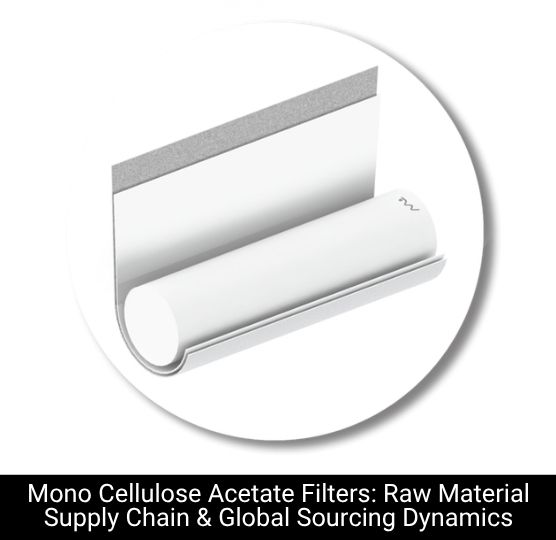
The cellulose acetate tow supply chain, which directly feeds mono cellulose acetate filter production, continues to be concentrated among a handful of global producers. In 2026, tow availability and pricing remain a critical factor in the total cost structure for mono acetate filter rod manufacturers. Geopolitical trade realignments and logistics adjustments post-pandemic have pushed several manufacturers to develop more regionalised sourcing strategies. Notably, manufacturers in South Korea, India and parts of Eastern Europe are strengthening their tow procurement agreements to stabilise production costs and ensure uninterrupted output – a factor that directly impacts pricing structures offered to cigarette makers globally.
Mono Type Acetate Filter Rods: Regulatory Influence on Demand in 2026
Regulatory frameworks across the EU, ASEAN and parts of Latin America are indirectly reshaping the demand profile for mono type acetate filter rods. Restrictions on flavoured and capsule variants in several markets – including recent or pending regulatory action in the EU and parts of South America – are redirecting procurement back toward standard mono filter configurations. Cigarette brands that previously invested in flavour-forward or dual-segment products are reformulating their product lines to include plain mono acetate cigarette filter rods to maintain compliance while managing portfolio complexity. This regulatory redirection is contributing to a volume uptick in mono filter procurement in markets where flavour restrictions have either been enacted or are anticipated by 2026.
Our Other Filters
Dual Cigarette Filter RodMono Capsule Filter Rods: Where Hybrid Demand Intersects the Mono Segment
Although technically a sub-category, mono capsule filter rods represent a meaningful intersection between standard mono construction and the capsule segment. In markets where flavour regulations have not yet taken effect – particularly across Africa, the Middle East and parts of Southeast Asia – mono capsule filter rods are seeing strong growth momentum in 2026. These products use a single acetate segment structure combined with a breakable flavour capsule, making them more cost-effective than multi-segment alternatives while still meeting consumer expectations for flavour optionality. For cigarette manufacturers targeting value and mid-premium segments, mono capsule variants offer a competitive price point without the structural complexity of dual or recessed formats.
Mono Acetate Rod Manufacturers: Competitive Landscape and Consolidation Trends
The competitive landscape among mono acetate rod manufacturers in 2026 is defined by increasing differentiation on quality consistency, lead times and technical customisation capability. Large-volume buyers – particularly regional cigarette manufacturers in Asia and the Middle East – are consolidating their supplier base, moving away from multiple low-cost vendors toward fewer partners that can demonstrate stable quality metrics across large shipment volumes. This is pushing mid-scale mono acetate rod manufacturers to invest in tighter quality control infrastructure, including real-time pressure drop monitoring, automated density calibration and improved wrapping material consistency. Manufacturers with export-ready documentation, efficient logistics partnerships and demonstrated capacity for custom specification fulfillment are gaining competitive ground in 2026.
Mono Acetate Filter Rod for Tobacco: Demand from Emerging and Frontier Markets
One of the more underreported demand drivers in 2026 is the growth of cigarette production capacity in frontier and emerging markets. Countries across sub-Saharan Africa, Central Asia and parts of the Middle East are either establishing or scaling domestic cigarette manufacturing facilities – and mono acetate filter rod for tobacco use is the primary filter input for these new production lines. These markets predominantly require standard, competitively priced filter rod configurations rather than specialty segments, making them a significant growth channel for mono filter rod exporters. The combination of low-cost entry-level cigarette brands targeting these regions and the rising capacity buildout of local manufacturers is expected to sustain strong import demand for mono filter rods throughout 2026.
 WhatsApp Us Now!
Truewell Filter - Trusted Manufacturer & Exporter of Cigarette Filter Rods
Truewell Filter, headquarter in Seoul, Republic of Korea, is a manufacturer and exporter of a comprehensive range of cigarette filter rods, including mono acetate filter rods, dual filter rods, capsule filter rods, recessed filter rods, flavored filter rods and shaped filter rods. With over 30 years of combined expertise across filter production, material sourcing and tobacco manufacturing, Truewell serves cigarette manufacturers across Asia, the Middle East, Europe, Africa and Latin America. The company operates on the core principles of True Technology, True Quality and True Service – ensuring reliable output and precision-engineered filter solutions for diverse brand requirements.
Our Other Filters
Capsule Cigarette Filter RodConclusion
In 2026, the global demand trajectory for mono cellulose acetate cigarette filter rods is shaped by a confluence of regulatory shifts, regional market growth, supply chain reconfigurations and evolving manufacturer preferences for quality and consistency. While the segment remains volume-dominant within the overall filter rod market, the competitive dynamics are increasingly rewarding suppliers that combine technical precision with reliable export capacity. For cigarette manufacturers and sourcing professionals, aligning with capable mono acetate rod manufacturers that can deliver both scale and specification accuracy will be the defining procurement priority of the year.