



Table of Contents
Tobacco Filter Function and Cigarette Filter Materials:
The term tobacco filter is often used interchangeably with cigarette filter, but the two terms carry slightly different associations depending on the context. This guide explains what a tobacco filter is, how it works, what it is made from, and the different types used across cigarette and roll your own tobacco products, along with practical guidance for manufacturers and buyers sourcing tobacco filters at scale.
What Is a Tobacco Filter?
A tobacco filter is a component attached to a tobacco product, most commonly a cigarette, that filters the smoke stream before it reaches the smoker. The term is used broadly across the industry to describe filters used not only in factory made cigarettes but also in roll your own and make your own tobacco products, where smokers insert a separate filter tube or tip into a hand rolled cigarette.
In factory made cigarette production, the tobacco filter is more specifically referred to as a filter rod, which is produced separately by a filter rod manufacturer and then attached to the tobacco column during cigarette assembly.
How Does a Tobacco Filter Work?
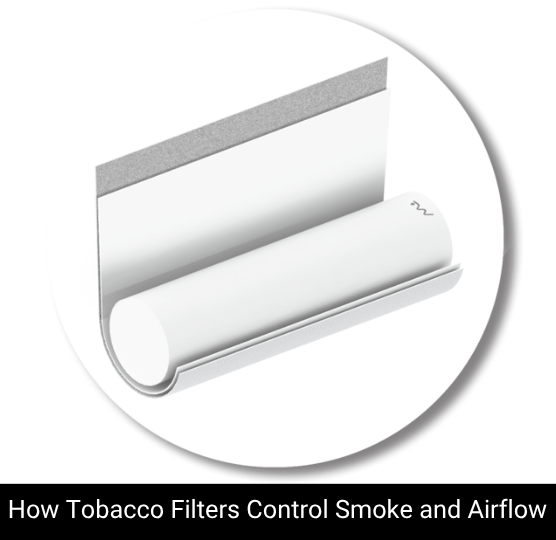
A tobacco filter works by physically trapping a portion of the particulate matter carried in tobacco smoke as it passes through the densely packed fiber structure of the filter material. At the same time, the filter regulates airflow, creating a specific draw resistance that shapes how easily a smoker can pull air and smoke through the product.
This combination of particulate filtration and airflow regulation is what distinguishes a tobacco filter from a simple hollow tube. The internal structure, density, and material composition of the filter all contribute to how effectively it performs both functions.
Read Our Article
Choosing the Right Cigarette Filter Rod ManufacturerWhat Is a Tobacco Filter Made Of?
The most common material used in tobacco filters is cellulose acetate tow, a fibrous material derived from wood pulp and processed into fine, crimped filaments that are bonded together during filter rod formation. This material is favored across the industry for its consistent density, filtration performance, and compatibility with high speed manufacturing processes.
Some tobacco filter designs incorporate additional materials, most notably activated carbon or charcoal granules, positioned within a segment of the filter to provide an additional stage of filtration. Paper components, including plug wrap around the core material and tipping paper around the finished filter, complete the physical structure.
- Cellulose acetate tow, the primary fiber material in most tobacco filters
- Activated carbon or charcoal, used in charcoal and dual filter designs
- Plug wrap paper, holding the internal filter material together
- Tipping paper, forming the outer surface of the finished filter
What Types of Tobacco Filters Are Used in Cigarette Manufacturing?
Cigarette manufacturers use a range of tobacco filter designs depending on the product line and target market. Mono acetate filters remain the most widely used standard format. Dual filters combine two segments, often acetate paired with charcoal, for layered filtration. Recessed filters incorporate a hollow air chamber to modify draw characteristics. Capsule filters contain a breakable flavor capsule for on demand flavor activation, while flavored filters are infused with flavor compounds throughout the material itself.
Beyond factory made cigarettes, roll your own tobacco users often purchase separate filter tubes or filter tips, which serve the same fundamental function but are packaged and sold independently of the tobacco itself.
 Call Now !
Why Does Tobacco Filter Quality Matter?
The quality of a tobacco filter directly influences the finished product’s draw resistance, filtration consistency, and overall smoking experience. A filter with inconsistent density can cause a product to taste different from batch to batch, even when the tobacco blend itself remains unchanged. Poor filter construction can also create production line issues during cigarette assembly, since filters that do not meet dimensional or firmness specifications can jam or misalign on high speed machinery.
For manufacturers, this makes tobacco filter sourcing a meaningful quality control decision rather than a minor supporting purchase. A supplier with strong, consistent production control helps protect brand consistency across every batch that reaches the market.
How Are Tobacco Filters Manufactured at Scale?
Tobacco filter production begins with cellulose acetate tow being fed into specialized filter rod forming machinery, where it is compressed, bonded with a plasticizer, and wrapped in plug wrap paper to form a continuous filter rod. This continuous rod is then cut to length and, in cigarette manufacturing, attached to the tobacco column using tipping paper during the final assembly process.
Manufacturers producing tobacco filters at scale rely on precise control over fiber density, plasticizer application, and forming speed to maintain consistency across large production volumes, since even small variations can accumulate into noticeable differences by the time a product reaches store shelves.
Our Other Filters
Mono Acetate Filter RodsWhat Is the Difference Between a Tobacco Filter and a Cigarette Filter?
In most practical contexts these terms describe the same thing, since the vast majority of tobacco filters are used in cigarettes. The term tobacco filter is sometimes used more broadly to include filter tubes and filter tips sold separately for roll your own tobacco, while cigarette filter more specifically implies a filter already attached to a factory made cigarette.
For manufacturers and suppliers, the distinction matters mainly in how the product is sold and specified, since a filter rod destined for factory cigarette assembly has different dimensional and handling requirements than a pre rolled filter tube sold as a standalone consumer product.
How Does Filter Density Affect a Tobacco Filter's Performance?
Filter density, meaning how tightly the cellulose acetate fibers are packed within the filter rod, is one of the primary variables manufacturers adjust to control a tobacco filter’s draw resistance and filtration efficiency. Higher density generally increases both filtration and draw resistance, while lower density reduces both.
Manufacturers calibrate this density specifically for each product line, balancing the target smoking characteristics against regulatory tar and nicotine yield requirements that apply in their target markets. This is why filter density specifications are one of the first details discussed between a manufacturer and a filter rod supplier during product development.
What Standards Apply to Tobacco Filter Production?
Tobacco filter manufacturers generally follow internal quality standards covering dimensional accuracy, firmness, and material purity, alongside any regulatory requirements specific to the markets their finished cigarettes will be sold in. These standards often include specific testing for pressure drop consistency, since this single measurement has an outsized effect on how a finished cigarette performs during use.
Manufacturers sourcing tobacco filters from a new supplier should ask specifically how that supplier tests and documents these quality parameters, since testing practices vary considerably between suppliers and this variation often explains differences in finished product consistency.
 Email Us Today!
What Should Buyers Know Before Sourcing Tobacco Filters?
Buyers new to sourcing tobacco filters, whether for cigarette production or a roll your own product line, should approach the process with a clear understanding of their specific requirements before contacting suppliers. This includes the target pressure drop range, preferred filter format, expected order volume, and any market specific regulatory requirements that apply to the finished product.
Coming to a supplier conversation with these details clearly defined typically results in a faster, more accurate quotation and sampling process, compared to starting from a general inquiry and working through specifications over multiple rounds of back and forth communication.
How Does Tobacco Filter Sourcing Fit Into Overall Production Planning?
For manufacturers, tobacco filter sourcing is rarely an isolated decision made independently of broader production planning. Filter rod specifications need to align with a manufacturer’s cigarette assembly machinery, target market regulatory requirements, and overall product positioning, which means filter sourcing conversations often happen alongside broader product development discussions rather than as a separate procurement task handled in isolation.
Manufacturers who involve their filter rod supplier early in the product development process, rather than only at the final sourcing stage, often find the resulting specification process moves faster and produces fewer surprises once production begins at scale.
Frequently Asked Questions
What is a tobacco filter?
A tobacco filter is a component attached to a tobacco product, most commonly a cigarette, that filters the smoke stream and regulates draw resistance before it reaches the smoker.
What is a tobacco filter made of?
Most tobacco filters are made from cellulose acetate tow, sometimes combined with activated carbon or charcoal segments, along with plug wrap and tipping paper as structural layers.
Is a tobacco filter the same as a cigarette filter?
In most practical contexts yes, since the majority of tobacco filters are used in cigarettes. The term tobacco filter is sometimes used more broadly to include filter tubes sold for roll your own tobacco.
Why does tobacco filter quality matter for manufacturers?
Filter quality affects draw resistance, filtration consistency, and production line performance during cigarette assembly, making it a meaningful factor in maintaining consistent product quality across batches.
Sourcing Tobacco Filters for Cigarette Production
A tobacco filter is a precisely engineered component that shapes both the filtration performance and the smoking characteristics of a finished tobacco product, whether used in factory made cigarettes or roll your own applications. Consistent quality in the underlying filter rod is one of the more overlooked factors in maintaining a stable, recognizable product for consumers, and it is a factor manufacturers can control directly through careful supplier selection.
Truewell Filter manufactures cellulose acetate based tobacco filter rods across mono acetate, dual, recessed, capsule, flavored, and shaped formats, applying consistent production quality control for manufacturers worldwide.
Whether a manufacturer is developing a new cigarette product line or sourcing filter tubes for a roll your own tobacco brand, working with a supplier who understands the full range of tobacco filter terminology and technical requirements helps avoid miscommunication during the specification and sampling process. Clear communication at this early stage tends to save considerable time later, once a specification moves into full scale production and any misunderstanding becomes far more costly to correct.
Contact Truewell Filter today to learn more about our tobacco filter rod range, request samples, or discuss your production requirements.