



Table of Contents
Recessed Filter Meaning and Cigarette Filter Design:
Recessed filter is a term that comes up often among smokers and cigarette manufacturers alike, but the exact meaning is not always clear. This guide explains what a recessed filter actually is, how it works, what makes it different from a standard filter, and why some cigarette brands choose this design over other filter rod formats. It also covers the manufacturing considerations that matter most for producers sourcing recessed filter rods for their own product lines.
What Is a Recessed Filter?
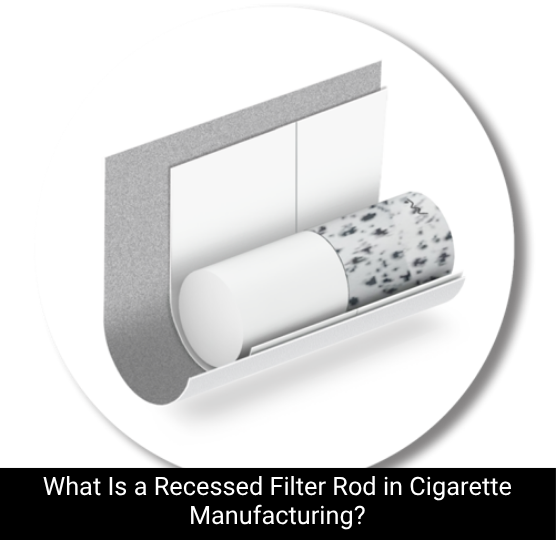
A recessed filter is a cigarette filter design that includes a hollow air gap segment built into the filter rod, positioned between the tobacco column and the solid filtering material. Rather than being a fully solid filter from end to end, a recessed filter has an open chamber section, often located at the mouth end or in the middle of the rod, which allows a portion of air to mix into the smoke stream before it reaches the smoker.
This design is sometimes described using slightly different terms depending on the market, including hollow filter, air chamber filter, or ventilated filter, but they all refer to the same underlying concept: an intentional open space within the filter rod construction.
What Does Recessed Filter Mean in Cigarette Manufacturing?
From a manufacturing standpoint, a recessed filter rod is produced with a precise hollow segment formed during the filter rod making process, rather than being packed with cellulose acetate tow along its entire length. Producing this hollow section consistently, without collapsing or deforming under the pressure of high speed cigarette assembly machinery, requires more precise engineering than a standard solid filter rod.
The size, position, and shape of the recessed segment can be adjusted depending on how a manufacturer wants the finished cigarette to draw and how much air dilution they want to introduce into the smoke stream.
How Does a Recessed Filter Work?
As a smoker draws on a cigarette with a recessed filter, the air chamber allows additional ambient air to enter and mix with the smoke before it passes through the remaining solid portion of the filter. This mixing effect is often associated with a perceived cooling of the smoke and a change in draw characteristics compared to a fully solid filter of the same length.
The recessed segment also affects pressure drop, since air moving through an open chamber encounters less resistance than air moving through densely packed tow. Manufacturers use this property deliberately when designing a product’s smoking characteristics, balancing the solid filtering segment against the open recess to achieve a specific draw profile.
 Call Now !
Recessed Filter vs Standard Filter: What Is the Difference?
A standard mono acetate filter is packed with cellulose acetate tow along its full length, providing consistent filtration and draw resistance from end to end. A recessed filter modifies this structure by removing part of that solid tow section and replacing it with an open air gap.
- Standard filters provide uniform filtration density across the entire filter length
- Recessed filters introduce a deliberate air gap that changes draw resistance and smoke dilution
- Standard filters are generally simpler and less costly to produce at scale
- Recessed filters require more precise forming control to maintain the hollow segment consistently
Why Do Some Cigarette Brands Use Recessed Filters?
Cigarette brands choose recessed filter designs for a mix of product positioning and smoking characteristic reasons. Some brands use the recessed design as part of a broader low tar or lighter smoking experience positioning, since the air dilution effect can be associated with a milder draw. Others use it primarily as a structural or design differentiator that sets their product apart on the shelf.
Consumer perception also plays a role. Some smokers associate a recessed filter with a distinct sensation during use, which can become a recognizable brand feature over time, independent of any specific regulatory or compliance driver.
How Are Recessed Filter Rods Manufactured?
Recessed filter rods are produced on specialized filter rod forming machinery capable of creating a controlled hollow segment within the rod structure while maintaining overall rod integrity. This requires tighter tolerances than standard filter production, since an inconsistent recess can lead to structural weakness, uneven draw resistance across a production batch, or issues during high speed cigarette assembly.
Manufacturers sourcing recessed filter rods should evaluate a supplier’s specific experience with this format, since not every filter rod producer has the same level of precision control over recessed segment formation. Asking for sample batches and reviewing consistency across those samples is a practical way to assess a supplier’s capability before committing to a full production order.
Our Other Filters
Capsule Cigarette Filter RodWhat Does a Recessed Filter Do to Smoke Delivery?
Beyond the sensation of a cooler draw, the recessed segment influences how much diluting air mixes into the smoke stream before it reaches the smoker. This has a measurable effect on the concentration of smoke constituents delivered per puff, which is one reason recessed filter designs are sometimes associated with lighter or milder positioned products in a manufacturer’s lineup.
It is worth noting that the exact effect depends heavily on the specific dimensions of the recessed segment, including its length and position within the overall filter rod, so two recessed filter designs from different manufacturers can behave quite differently even though both fall under the same general category.
Are Recessed Filters More Expensive to Produce?
Recessed filter rods generally cost more to produce than standard mono acetate filters, primarily due to the additional precision required in forming and maintaining the hollow segment consistently across a production run. Manufacturers evaluating whether to add a recessed filter product line should factor this cost difference into their pricing and positioning decisions from the outset.
That said, the cost premium is often modest relative to the differentiation benefit a recessed filter design can provide, particularly for brands looking to stand out in a market segment where most competing products use standard solid filters.
What Should Manufacturers Ask a Recessed Filter Supplier?
Before committing to a recessed filter rod order, manufacturers should ask a potential supplier directly about their specific experience with this format, since general filter rod production experience does not automatically translate into reliable recessed segment forming.
- How consistently the supplier maintains the recessed segment across large production batches
- What quality control checks are applied specifically to the hollow segment
- Whether sample batches are available for testing before a full production order
- What lead times apply to recessed filter rod orders compared to standard formats
 Email Us Today!
Can Recessed Filters Be Combined With Other Filter Features?
Recessed filter designs are not limited to standalone use and can be combined with other filter rod features depending on a manufacturer’s product goals. Some designs pair a recessed air chamber with a charcoal segment, aiming to combine the draw modification effect of the recess with the additional filtration associated with charcoal. Others combine a recessed segment with a capsule, allowing the smoker to activate a flavor change while still experiencing the airflow characteristics of the recessed design.
These combination formats require more complex production coordination than a single feature filter rod, since manufacturers need to maintain consistency across multiple structural elements within the same rod. Suppliers with experience specifically in combination filter rod production are better positioned to deliver consistent results for manufacturers interested in these more advanced designs.
What Should Consumers Know About Recessed Filters?
For smokers curious about the term, a recessed filter is simply a specific engineering choice made by a cigarette manufacturer, not an indicator of a fundamentally different or safer product category. The recessed segment changes draw characteristics and smoke dilution, but it does not eliminate exposure to smoke constituents, and consumers researching this term for health related reasons should understand that no filter design, recessed or otherwise, makes cigarette smoking free of risk.
From a purely product design perspective, however, understanding what a recessed filter is and how it works helps explain why certain cigarette products feel or draw differently from others on the market, even when the tobacco blend itself is broadly similar.
Frequently Asked Questions
What is a recessed filter?
A recessed filter is a cigarette filter design that includes a hollow air gap segment built into the filter rod, allowing additional air to mix into the smoke stream before it reaches the smoker.
What does recessed filter mean in cigarette manufacturing?
It refers to a filter rod produced with a precise hollow segment rather than being packed with cellulose acetate tow along its entire length, requiring more precise forming control than a standard solid filter.
What is the difference between a recessed filter and a standard filter?
A standard filter is packed with tow along its full length, while a recessed filter replaces part of that solid section with an open air gap, changing draw resistance and smoke dilution.
Why do some cigarette brands use recessed filters?
Brands use recessed filters for product positioning reasons, including an association with a milder or cooler draw, and as a structural design feature that differentiates their product from competitors using standard filters.
Sourcing Recessed Filter Rods
A recessed filter is a specific filter rod design built around a controlled hollow air gap segment, distinct from a standard solid filter, and used by cigarette brands seeking a particular draw characteristic or product differentiation. Producing this format consistently at scale requires precise manufacturing control, which makes supplier selection especially important for brands relying on this design.
Truewell Filter manufactures recessed filter rods alongside its full range of mono acetate, dual, capsule, flavored, and shaped filter rod formats, applying consistent quality control across every production run.
Manufacturers considering a recessed filter product line for the first time are welcome to request sample batches and technical guidance to help determine the right recess dimensions and segment configuration for their specific product goals. Working through a few rounds of sampling before finalizing a production order is generally the most reliable way to confirm that a given specification performs as expected on a manufacturer’s own assembly line.
Contact Truewell Filter today to learn more about our recessed filter rod production, request samples, or discuss your specification requirements.