



Table of Contents
Cigarette Filter Function and Filter Rod Basics:
A cigarette filter is a small but critical component that sits at the mouth end of a cigarette, and it plays a much bigger role in the smoking experience than most consumers realize. This guide explains what a cigarette filter actually is, how it works, what it is made from, and the main filter rod types used by cigarette manufacturers today. For manufacturers and procurement teams researching filter rod sourcing, understanding these fundamentals is the starting point for evaluating suppliers and specifications.
What Is a Cigarette Filter?
A cigarette filter is a cylindrical component attached to one end of a cigarette, positioned between the tobacco column and the smoker’s mouth. Its primary function is to filter the smoke drawn through it, reducing certain particulate matter and moderating draw resistance so the cigarette delivers a consistent smoking experience from the first puff to the last.
Filters became a standard feature of most cigarettes over the course of the twentieth century, and today the vast majority of cigarettes manufactured worldwide include some form of filter, ranging from a simple mono acetate design to more complex multi segment constructions.
 Call Now!
How Does a Cigarette Filter Work?
When a smoker draws on a cigarette, air and smoke are pulled through the tobacco column and then through the filter before reaching the mouth. The filter is made of densely packed fibers, most commonly cellulose acetate tow, which physically trap a portion of the particulate matter and tar carried in the smoke stream while still allowing air to pass through at a controlled rate.
This controlled airflow is often described as pressure drop or draw resistance, and it is one of the most carefully engineered properties of a filter rod. Too little resistance and the cigarette draws too easily, affecting flavor delivery and burn rate. Too much resistance and the cigarette becomes difficult to draw on. Manufacturers calibrate filter density and construction specifically to hit a target pressure drop for each product line.
What Is a Filter Rod?
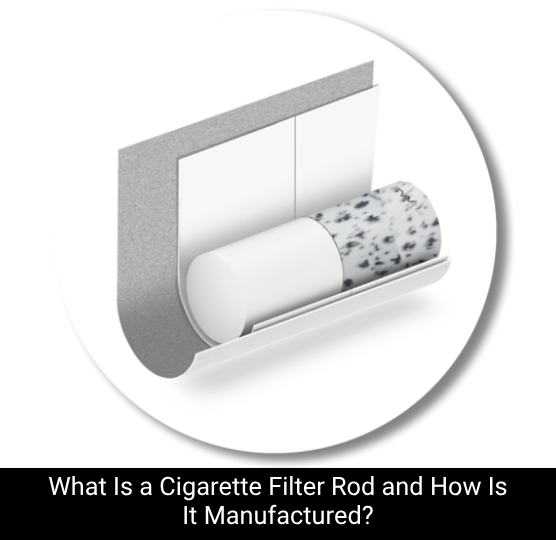
A cigarette filter rod is the manufactured component that becomes a cigarette filter once it is cut to length and attached to the tobacco rod during cigarette assembly. Filter rod manufacturers produce these in continuous lengths on specialized machinery, then cut and wrap them to the dimensions a cigarette manufacturer specifies.
Filter rod cigarette production is a distinct manufacturing process from cigarette assembly itself, which is why most tobacco brands source filter rods from a dedicated filter rod supplier rather than producing them in house. This division of labor allows filter rod manufacturers to specialize in fiber processing, precision forming, and quality control specific to filter production.
What Materials Are Used to Make Cigarette Filters?
The overwhelming majority of cigarette filters are made from cellulose acetate tow, a fibrous material derived from wood pulp that is chemically processed into fine, crimped filaments. These filaments are bonded together with a plasticizer during the filter rod forming process, creating a firm but porous structure.
Some filter designs incorporate additional materials alongside cellulose acetate tow. Charcoal or activated carbon segments are used in dual filter and charcoal filter designs to add an extra stage of filtration. Paper wrapping surrounds the tow core in virtually all filter rod designs, giving the finished filter its outer structure and appearance.
- Cellulose acetate tow, the core fiber material used in most filter rods
- Charcoal or activated carbon granules, used in dual and charcoal filter designs
- Plug wrap paper, which holds the tow core together
- Tipping paper, the outer paper that wraps around the finished filter and attaches it to the tobacco rod
What Types of Cigarette Filters Are There?
Cigarette filter rod design has evolved well beyond a single standard format. Manufacturers now choose from a range of filter rod types depending on their brand positioning, target market, and regulatory environment.
- Mono acetate filter rods, the standard single segment filter made entirely of cellulose acetate tow
- Dual filter rods, combining two segments, often acetate paired with charcoal, for layered filtration
- Recessed filter rods, which include a hollow air gap segment to cool and adjust the smoke stream
- Capsule or click filter rods, containing a breakable flavor capsule the smoker can activate during use
- Flavored filter rods, infused with flavor compounds throughout the tow rather than in a single capsule
- Inner shaped or tube filter rods, featuring a structured hollow core for airflow adjustment
- Outer shaped filter rods, using a sculpted or embossed exterior for visual brand differentiation
Our Other Filters
Mono Acetate Filter RodsWhy Does Filter Quality Matter for Cigarette Manufacturers?
Filter quality directly affects the finished cigarette in ways consumers notice even if they cannot name the exact cause. Inconsistent pressure drop makes a product taste different from pack to pack. Poor tow density can affect burn rate and smoke delivery. Weak or poorly formed filters can also cause production line issues during high speed cigarette assembly, leading to downtime and waste.
For manufacturers, sourcing filter rods from a supplier with strong, consistent production control is one of the more overlooked factors in maintaining product quality at scale. A cigarette brand’s reputation for consistency often depends as much on filter rod quality as it does on the tobacco blend itself.
What Is the Difference Between a Filter Rod and a Cigarette Filter?
These two terms are closely related but refer to slightly different stages of the same product. A filter rod is the manufactured component produced by a filter rod supplier, typically supplied in continuous lengths and cut to a standard size before shipment. A cigarette filter refers to that same component once it has been attached to the tobacco rod during cigarette assembly and become part of a finished cigarette.
In everyday conversation, the two terms are often used interchangeably, and most people researching filter rod cigarette options are really asking about the same underlying product from two different points in the manufacturing process.
How Is a Filter Rod Attached to a Cigarette?
During cigarette assembly, a cut length of filter rod is joined to the tobacco rod using tipping paper, a thin paper that wraps around both the end of the tobacco column and the filter rod, binding them into a single finished cigarette. This step happens on high speed assembly machinery capable of producing thousands of cigarettes per minute, which is why dimensional consistency in the filter rod itself matters so much to manufacturers.
A filter rod that varies even slightly in diameter or firmness from the specification a manufacturer’s machinery is calibrated for can cause misalignment, jamming, or increased waste during this stage, making manufacturing tolerance one of the most practical reasons filter rod quality control matters beyond the finished smoking experience.
What Should Manufacturers Look for in a Filter Rod Supplier?
For manufacturers sourcing filter rods rather than producing them in house, supplier selection has a direct effect on both product quality and production efficiency. A few factors are worth prioritizing when evaluating potential filter rod suppliers.
- Consistent dimensional accuracy across production batches, to avoid assembly line issues
- Transparent raw material sourcing, particularly the origin and grade of cellulose acetate tow used
- A full range of filter rod formats, so a manufacturer is not limited to a single design as product lines evolve
- Reliable production capacity and lead times that match a manufacturer’s own production schedule
 Email Us Now!
What Factors Influence Filter Rod Pricing?
Filter rod pricing depends on several factors beyond the basic quantity ordered. The grade of cellulose acetate tow used, whether virgin or recycled, has a significant effect on per unit cost, with virgin tow commanding a premium due to its higher raw material cost and more consistent performance. The specific filter rod format also matters, since dual, recessed, and capsule filters all require additional production steps compared to a standard mono acetate design, which is reflected in their pricing.
Manufacturers comparing quotations from different filter rod suppliers should confirm that they are comparing equivalent specifications, since a lower price often reflects a lower tow grade or less rigorous quality control rather than simply better production efficiency on the supplier’s part.
Frequently Asked Questions
What is a cigarette filter made of?
Most cigarette filters are made from cellulose acetate tow, a fibrous material derived from wood pulp. Some designs also include charcoal or activated carbon segments, along with plug wrap and tipping paper as outer structural layers.
What is a filter rod?
A filter rod is the manufactured component produced by a filter rod supplier that becomes a cigarette filter once it is cut to length and attached to the tobacco rod during cigarette assembly.
How does a cigarette filter reduce tar and particulate matter?
The densely packed fibers inside a cigarette filter physically trap a portion of the particulate matter carried in the smoke stream as it passes through, while the filter's density and construction control how much air moves through at once.
What types of cigarette filters are available?
Common filter rod types include mono acetate, dual filter, recessed filter, capsule or click filter, flavored filter, inner shaped or tube filter, and outer shaped filter rods, each suited to different product and brand positioning needs.
Choosing a Cigarette Filter Rod Supplier
Understanding how a cigarette filter works, what it is made from, and the range of filter rod types available gives manufacturers a stronger foundation for evaluating potential suppliers. The right filter rod partner should be able to explain their material sourcing, demonstrate consistent production quality, and offer the specific filter rod types a brand needs, whether that is a standard mono acetate design or a more specialized capsule, recessed, or shaped filter rod. Taking the time to understand these fundamentals before starting supplier conversations also makes it easier to ask informed questions and compare quotations on an equal footing.
Truewell Filter manufactures the full range of filter rod types described in this guide, including mono acetate, dual, recessed, capsule, flavored, inner shaped, and outer shaped filter rods, produced with consistent quality control for cigarette manufacturers worldwide.
Contact Truewell Filter today to learn more about our filter rod range, request samples, or discuss your specific filter rod requirements.