Table of Contents
Cigarette Filter Rod Manufacturing Process and Quality Control:
A cigarette filter rod looks simple, a white cylinder a few centimeters long, yet it is the product of a carefully controlled industrial process. Every rod begins as a bale of cellulose acetate tow, a bundle of continuous crimped fibers, and ends as a firm, uniformly wrapped rod that a cigarette making machine can cut into hundreds of identical filters. Understanding how that transformation happens helps buyers judge what to ask a supplier and which quality checks genuinely matter.
This article walks through the main stages of filter rod manufacturing, from tow preparation to cutting and inspection, and explains how dual, recessed, tube, and capsule filter rods add extra steps. The general process described here reflects standard industry practice for cellulose acetate rods, and where Truewell Filter’s own production is described, it follows the capabilities listed on the Truewell Filter website.
What a Cigarette Filter Rod Is Made Of
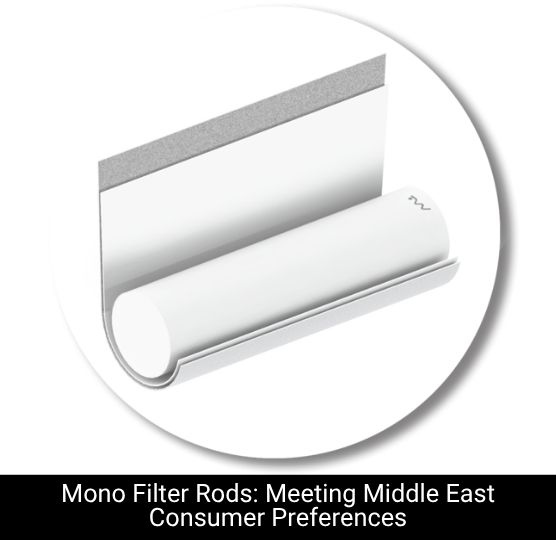
The core material of a standard filter rod is cellulose acetate tow. Tow is made of very fine continuous filaments that are crimped so they bulk up and hold air between the fibers. That open structure is what allows smoke to pass through the rod while the fiber surface does the filtering work. The tow is delivered to the filter rod maker in compressed bales.
Three other materials complete a basic rod. A plasticizer, commonly triacetin, is applied to the fibers so they bond lightly at contact points and give the rod its firmness. A plug wrap paper surrounds the tow and holds the shape. An adhesive seals the seam of that paper. Special rods add further components such as activated carbon, flavor capsules, or flavor compounds.
Step One: Tow Preparation and Blooming
Production starts with opening the bale. The compressed tow is fed from the bale into the machine and passed through a set of rollers and air jets that spread the fibers out. This stage is called blooming. It separates the tightly packed filaments into a wide, even band and activates the crimp so the tow regains its bulk.
Blooming has a direct effect on the finished rod. If the band is uneven, the density of the rod will vary and the pressure drop will vary with it. Operators therefore set the roller speeds and air pressure carefully for the denier and total denier of the tow in use, and they monitor the band continuously rather than setting it once and leaving it.
Step Two: Plasticizer Application
Once the tow band is open, the plasticizer is applied, usually as a fine spray. The amount is critical. Too little and the rod will be soft and lose its shape, too much and it can become hard and affect the draw. The plasticizer softens the surface of the fibers so that, where they touch, they bond into a lightly connected network.
That network is what gives a finished rod its hardness and its ability to hold a cylindrical form. Controlling plasticizer level is therefore one of the main ways a manufacturer tunes firmness, and it works together with tow weight to set the final pressure drop of the rod.
Step Three: Forming the Rod and Wrapping the Plug Wrap
After treatment the band is gathered into a tapered funnel often called a garniture, which draws it into a compact round cross section. The amount of tow pulled through per unit of time sets the weight and density of the rod. At the same moment, a continuous strip of plug wrap paper is brought around the tow and folded into a tube.
The seam of the paper is sealed with adhesive and the wrapped column is passed through a heating or sealing section to set the glue. The result is a continuous rod of the required circumference. This is the point where diameter classes such as King Size, Slim, Super Slim, and Nano Slim are determined, because the forming tooling sets the circumference.
Step Four: Cutting to Rod Length
The continuous rod is cut into individual rods by a rotating knife at a set length. Rod length is a customizable parameter, and it is normally a multiple of the finished filter length so that the cigarette making machine can divide each rod into several filters. Cutting must be clean and square, because a ragged or slanted end will affect how filters sit against the tobacco rod.
The cut rods are collected and packed into trays or cases. Because each rod will later become many filters, any variation in cut length or end quality is multiplied, which is why length is checked as part of routine inspection.
Step Five: Conditioning and Stabilization
Freshly made rods are not always used immediately. It is common practice in the industry to let rods rest for a period so that the plasticizer and the adhesive stabilize and the hardness settles to its final value. Handling rods too soon after production can give readings that differ from those taken after the rod has stabilized.
For buyers, this is a reason to agree on how and when specifications are measured. A pressure drop or hardness reading is only comparable between supplier and buyer if both measure under the same conditions and at a similar point after production.
How Capsule, Dual, Tube, and Recessed Rods Differ
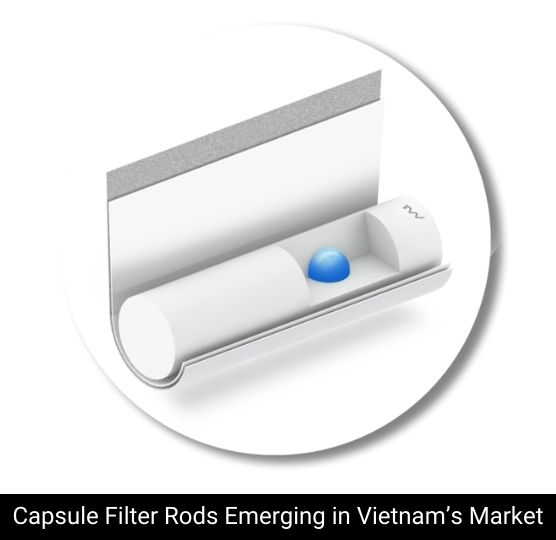
The steps above describe a mono acetate rod. Other rod types add stages. A capsule filter rod requires flavor capsules to be placed into the tow at set intervals, and Truewell Filter lists automated capsule insertion systems among its capabilities. Flavored filter rods use a flavor infusion step, and shaped rods use shaping machinery to form hollow cores, grooves, or other structures.
Dual filter rods combine two segments, such as acetate and charcoal, or acetate sections of different density. Recessed rods are built so that a controlled hollow recess sits at the mouth end. In every case the extra step must be synchronized with the cutting step so each finished filter contains the correct components in the correct position.
Quality Checks During and After Production
Quality control runs through the whole process rather than only at the end. According to the Truewell Filter website, production includes real time density monitoring, along with checks on firmness, ventilation accuracy, flavor retention, and dimensional precision. Density monitoring is especially valuable because it catches drift while rods are still being made, before a large quantity is affected.
Final checks typically cover weight, pressure drop, hardness, circumference, and length, measured on samples taken across the production run. Buyers can use the same list as a framework when comparing suppliers, and our guide to filter rod specifications explains each of these parameters in detail.
Why Raw Material Source Matters
Because the tow is the main component of the rod, its consistency carries through into the finished product. Truewell Filter uses EU sourced cellulose acetate tow from established suppliers such as Cerdia and Celanese, and does not use recycled or polypropylene tow. A consistent, documented raw material makes it easier to hold the same specification from batch to batch, and it removes one of the biggest sources of hidden variation in a finished filter rod.
Frequently Asked Questions
What are cigarette filter rods made from?
A standard cigarette filter rod is made from cellulose acetate tow, a plasticizer such as triacetin that gives it firmness, a plug wrap paper that holds its shape, and an adhesive that seals the paper seam. Special rods add components such as activated carbon, capsules, or flavor compounds.
What is blooming in filter rod production?
Blooming is the stage where compressed tow is spread out by rollers and air jets into a wide, even band, which restores the crimp and bulk of the fibers. Even blooming gives the rod uniform density and a stable pressure drop.
How is a capsule filter rod different to manufacture?
A capsule filter rod needs an extra stage in which flavor capsules are inserted into the tow at precise intervals so that each finished filter contains a capsule. Truewell Filter lists automated capsule insertion systems among its production capabilities.
Which quality checks matter most for filter rods?
The most important checks are weight, pressure drop, hardness, circumference, and length, supported by density monitoring during production. Truewell Filter also lists checks on ventilation accuracy and flavor retention for relevant rod types.
From Tow Bale to Reliable Filter Rod
Filter rod manufacturing combines careful material handling with precise machine control. Tow preparation, plasticizer application, forming, cutting, and conditioning each leave their mark on the finished rod, and extra stages for capsules, flavors, and shapes add further points to control. Buyers who understand these stages can ask sharper questions and recognize a supplier that manages quality throughout the process.
Truewell Filter, based in Seoul, South Korea, manufactures mono acetate, dual, recessed, capsule, flavored, and shaped filter rods with real time density monitoring and checks on firmness, ventilation accuracy, flavor retention, and dimensional precision.